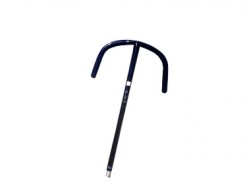
In the fields of chemical, food, pharmaceutical and other industries, anchor stirrers are key mixing equipment, and their mixing efficiency directly affects production efficiency and product quality. However, in practical applications, how to improve the mixing efficiency of anchor stirrers has become a focus of attention for many enterprises. Recently, a series of innovative technologies and optimization measures have been proposed to enhance the mixing performance of anchor stirrers, helping industrial production to proceed more efficiently and stably.
1. Equipment selection and optimization
1. Choose a suitable anchor stirrer:
Select the appropriate anchor stirrer model and specifications based on the properties of the mixed material (such as viscosity, density, solid content, etc.) and the size of the mixing container. Consider the material of the mixer to ensure its corrosion resistance and wear resistance, in order to meet the mixing needs of different materials.
2. Optimize the mixer design:
Adjust the shape, quantity, and angle of anchor shaped blades to better adapt to the flow characteristics of materials and improve mixing efficiency. Optimize the rigidity and stability of the mixing shaft to ensure that no deformation or vibration occurs during the mixing process, thereby affecting the mixing effect.

2. Adjustment of operating parameters
1. Adjust the mixing speed:
Adjust the stirring speed appropriately according to the viscosity and mixing requirements of the material. Generally speaking, increasing the stirring speed can improve the mixing efficiency, but too high a speed may lead to increased energy consumption and equipment wear.
2. Control the mixing time:
Reasonable mixing time can ensure thorough mixing of materials, while too short a time may result in uneven mixing, and too long a time may waste energy and time.
3. Optimize material temperature and viscosity:
By controlling the temperature of the material through heating or cooling devices, the viscosity can be reduced and the flowability can be improved, which is beneficial for mixing. Use additives or change the material formula to adjust its viscosity and make it easier to mix.
3. Process optimization and auxiliary equipment
1. Use multi-stage or multi-layer mixing:
Multiple stirrers are installed in the mixing container to form multi-stage or multi-layer mixing to improve mixing efficiency. Different mixers can be combined to achieve a synergistic effect of macroscopic mixing and microscopic dispersion.
2. Introduction of auxiliary equipment:
The use of auxiliary equipment such as high shear mixers or ultrasonic mixers can accelerate the mixing process of materials and improve mixing efficiency.
3. Optimize container structure:
Reasonably design the shape and size of the mixing container to reduce dead corners and liquid short circuits. For example, installing baffles can eliminate vortex phenomenon and improve mixing efficiency.
4. Energy consumption optimization and control
1. Reasonably control energy consumption:
By adjusting parameters such as the speed, power, and operating time of the mixer, energy consumption can be optimized. Avoid unnecessary energy waste while ensuring that mixing efficiency is not affected.
2. Adopting advanced control technology:
Using advanced technologies such as PLC control and frequency conversion control to achieve precise control and automated operation of the mixer. Real time adjustment of mixing parameters based on process requirements and material status to improve mixing efficiency and energy consumption control level.
5. Regular maintenance and upkeep
1. Regular cleaning and inspection:
Regularly clean and inspect the mixer and mixing container to prevent residue accumulation from affecting the mixing effect. At the same time, check the key components such as bearings and seals of the equipment to ensure their normal operation.
2. Timely replace worn parts:
For severely worn agitator blades, bearings, and other components, they should be replaced in a timely manner to avoid affecting mixing efficiency and equipment life.
In summary, improving the mixing efficiency of anchor stirrers requires starting from multiple aspects such as equipment selection and optimization, adjustment of operating parameters, process optimization and auxiliary equipment, energy consumption optimization and control, as well as regular maintenance and upkeep. By comprehensively considering these factors and taking corresponding measures, the mixing efficiency of anchor stirrers can be significantly improved, meeting production needs and improving product quality.


 Address:Room 1202, Detaitang Building, No. 118 Huaguang Road, Zhangdian District, Zibo, Shandong
 WhatsApp:+8613386433135
 Tel: +8613386433135