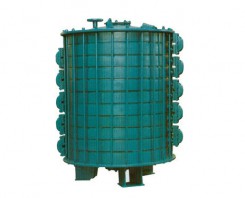
With the rapid development of the chemical industry, the maintenance of enamel glass disc condensers, as key equipment, is increasingly receiving widespread attention from the industry. The proposal of professional maintenance recommendations is particularly important to ensure that such equipment maintains high efficiency and stability during operation. Here are some professional suggestions:
2. Inspection of enamel layer: Use a porcelain layer thickness gauge to regularly check the thickness of the enamel layer, and the position of each inspection remains unchanged. At the same time, visually inspect the enamel layer for any signs of erosion, impact, or porcelain explosion. During the parking inspection, it is required that the inspectors do not bring any hard objects into the inner cylinder of the equipment, and conduct a detailed inspection of the enamel coating and various parts of the mixer.
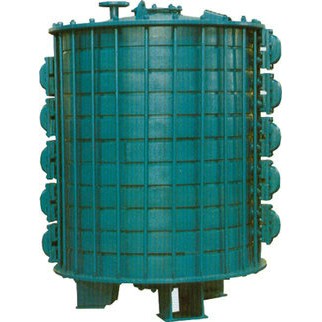
2. Cooling water management: Pay attention to checking the quality and flow rate of the cooling water to ensure that it can fully remove heat and avoid equipment overheating. If the cooling water is found to be turbid or the flow rate is insufficient, it should be dealt with in a timely manner to avoid affecting the condensation effect of the equipment.
3. Proper operation of feeding: It is strictly prohibited to use manholes as solid material feeding holes. Manhole is a passage designed for maintenance and inspection personnel to enter and exit equipment, which is in a closed state for a long time. When adding materials, if the discharge valve or discharge pipe is blocked, gently poke it open with non-metallic tools without touching or tapping.
When the equipment is not in use for a long time, rust and corrosion prevention measures should be taken. Clean and blow dry the inside of the enamel glass disc condenser to prevent residual media from corroding the equipment. At the same time, the exposed metal surface of the glass lined equipment substrate should also be treated with anti-corrosion measures to prevent corrosive gases in the factory air from condensing onto the equipment surface and corroding the substrate metal.
 Address:Room 1202, Detaitang Building, No. 118 Huaguang Road, Zhangdian District, Zibo, Shandong
 WhatsApp:+8613386433135
 Tel: +8613386433135