As a key equipment widely used in industries such as chemical, pharmaceutical, and food, the heating system of stainless steel reactors is one of its important components. The performance and efficiency of the heating system are directly related to the heating rate, temperature uniformity, and energy consumption of the materials inside the reactor. The following will provide a detailed introduction to the heating system of the stainless steel reactor.
1. Composition of Heating System
The heating system of a stainless steel reactor mainly consists of heating elements, temperature controllers, heat transfer media, and corresponding pipelines and valves.
1. Heating element: Heating elements are usually in the form of electric heating wires, electric heating tubes, or heating plates, which convert electrical energy into thermal energy to heat the reaction kettle. These heating elements are usually installed in the jacket or bottom of the reaction vessel to ensure uniform heat transfer to the reactants.
2. Temperature controller: The temperature controller is used to monitor and control the temperature inside the stainless steel reactor. It maintains the temperature inside the reaction vessel within a constant range by adjusting the power or switch state of the heating element based on the preset temperature value. Temperature controllers typically have high precision and stability to ensure the accuracy and safety of the reaction process.
3. Thermal conduction medium: Thermal conduction medium is used to transfer the heat generated by the heating element to the reactants. Common heat transfer media include steam, heat transfer oil, and water. These media circulate in the heating system, transferring heat from the heating element to the jacket or bottom of the stainless steel reactor, and then to the reactants.
4. Pipes and valves: Pipes and valves are used to connect heating elements, temperature controllers, and heat transfer media, as well as to regulate the flow rate and pressure of the media. They ensure the normal operation and flexibility of the heating system.
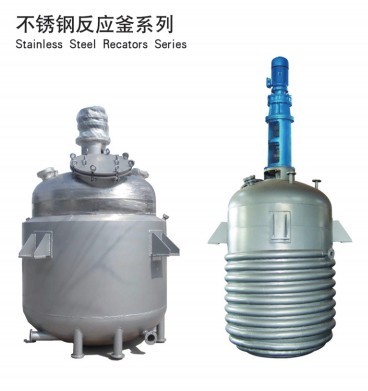
2. Heating method
The heating methods of stainless steel reactors are mainly divided into two types: direct heating and indirect heating.
1. Direct heating: Direct heating is the process of installing heating elements directly at the bottom or inside of a reaction vessel, and heating them by direct contact with the reactants. This method heats up quickly, but may affect the properties of the reactants, and the heating element is susceptible to corrosion and wear.
2. Indirect heating: Indirect heating is the process of installing heating elements on the jacket or exterior of a reaction vessel, and transferring heat to the reactants through a heat transfer medium. This method heats uniformly, has minimal impact on the properties of the reactants, and has a longer lifespan for the heating element.
3. Characteristics of Heating System
1. Efficient and energy-saving: The heating system of stainless steel reactors usually adopts efficient and energy-saving designs, such as using high-efficiency heating elements such as electric heating tubes or heating plates, as well as optimizing the circulation path and flow rate of the heat conduction medium to reduce energy consumption and improve heating efficiency.
2. Accurate temperature control: The temperature controller has high precision and stability, and can monitor and control the temperature inside the reaction vessel in real time, ensuring the accuracy and safety of the reaction process.
3. Strong adaptability: The heating system can be customized according to different reaction processes and requirements, such as selecting different heating elements, heat conduction media, and temperature controllers, to meet the conditions of various complex chemical reactions.
4. Easy to maintain: The structure of the heating system is relatively simple, easy to disassemble and clean, and convenient for maintenance and upkeep.
In summary, the heating system of stainless steel reaction kettle is one of its important components, which has the characteristics of high efficiency, energy saving, precise temperature control, strong adaptability, and easy maintenance. In industries such as chemical, pharmaceutical, and food, the heating system of stainless steel reactors plays a crucial role, providing stable and reliable heat sources for various chemical reactions.


 Address:Room 1202, Detaitang Building, No. 118 Huaguang Road, Zhangdian District, Zibo, Shandong
 WhatsApp:+8613386433135
 Tel: +8613386433135